🏋️♂️ Building Fitness Apps: Lessons From My First Startup
The challenges faced and overcome while building my first startup.
By Jameson Campbell
💡 Introduction
It was August 2013, and I remember it vividly. A late night in my living room with two college friends, Mike Xhaxho and Jonathan Ratcliff.
We were brainstorming ideas when we landed on a problem we wanted to solve.
Finding new workout plans online was painfully slow. Even after finding one, we'd still need to write down reps, sets, and watch YouTube videos for form. It was tedious and fragmented.
At the time, both fitness influencers and social media were exploding. We thought:
"What if we combined the two?"
That idea became Flexter, an app where users could find and purchase training plans from top trainers in one place. Trainers earned a cut of each sale.
With zero experience but plenty of drive, we decided to build it ourselves.
🧩 Building Flexter
We pooled our savings and hired a designer from London named Daniel. He worked nights after his day job, even through the birth of his first child, to bring our vision to life. What was supposed to take two weeks stretched into two months of late-night Skype calls and revisions.
Our first developer, from China, quit two weeks in, demanding more money. After arbitration, we recovered most of our funds and hired a second developer, Jiang, under milestone-based payments.
Four months later, with two additional part-timers, we had a working prototype.
Eventually, we ran out of money and brought in a local Austin developer, Anurag. After reviewing our code, he rated it a "2 out of 10." Painful, but fair. We decided to start over from scratch.
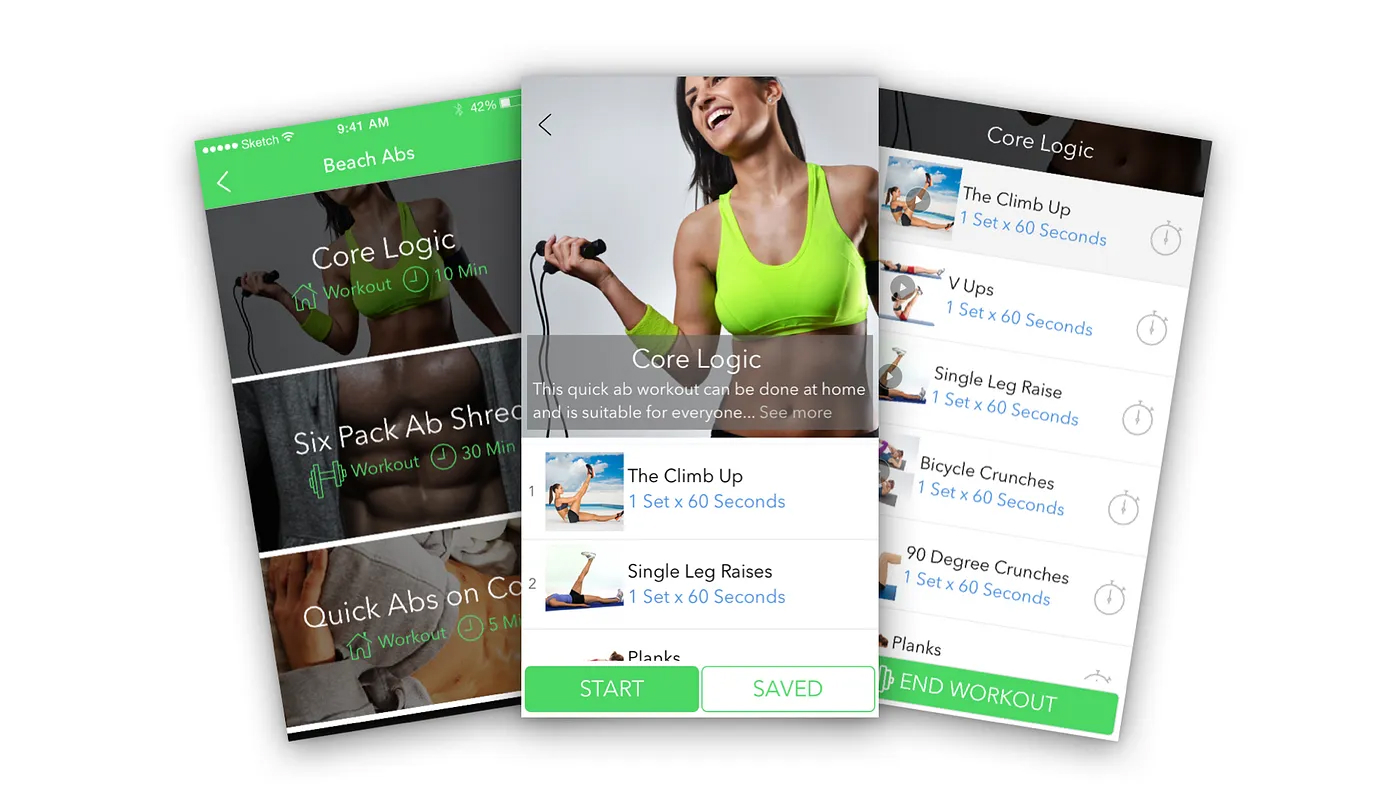
The redesigned Flexter app interface: built from scratch after starting over
Flexter: Find Free Workouts, Fast.
The app evolved into a library of free one-day workouts, with premium content planned for later. When Flexter finally launched, it was an incredible feeling. We even hosted a SXSW launch party at Rio.
Flexter's SXSW launch party at Rio: celebrating our first app launch
Our marketing strategy: have trainers promote their Flexter workouts on social media. Collectively, 50+ trainers had over 10 million followers. It worked at first.
But trainers weren't incentivized to keep posting without immediate income.
That's when the next idea hit:
Instead of one app for many trainers, what if we built a standalone app for one trainer?
💪 Toned: Home Workouts by Natalie Jill
Natalie specialized in at-home bodyweight workouts for women 30+. She was ranked #9 on Forbes' Top Fitness Influencers and featured on major networks like ABC, CBS, and NBC.
After a month of discussions, we signed a licensing deal. Natalie owned the content and marketing; our company, Flexter Inc., owned the source code and handled design, development, and support.
I taught myself Sketch on Udemy and designed her app from scratch.
We launched Toned in March 2015. It quickly gained traction, at one point reaching #13 among top-grossing U.S. Health & Fitness apps.

The Toned app interface: our successful partnership with Natalie Jill that reached #13 in the U.S. Health & Fitness charts
Revenue grew enough to bootstrap operations and pay ourselves a small amount. That summer, we joined the Capital Factory Accelerator in Austin, an environment buzzing with founders, mentors, and investors. It was electric.
🌱 Expanding the Portfolio: Get Loved Up by Koya Webb
As the company grew, we partnered with Koya Webb, an internationally known yoga teacher and holistic health coach.
Together we created Get Loved Up: 28-Day Holistic Health Challenge, a vegan recipe and lifestyle app with daily meal plans and shopping lists.

The Get Loved Up app interface: our partnership with Koya Webb for holistic health and vegan lifestyle
By then, Jon and I had learned app development end-to-end: managing remote teams, designing UI, and shipping multiple products from concept to App Store launch.
🧭 Conclusion
In 2019, we closed the business to pursue new paths.
Across all our apps, we generated 300k+ downloads and $300k+ in sales.
Those years taught me more than any classroom could: how to start from zero, find answers, and stay persistent through uncertainty.
Biggest lesson:
You don't need all the answers to start, just the persistence to keep building until you find them.